Άρθρο 3
Thermopylae: Hot Gates Myths (1)
The name Thermopylae is closely linked to the legendary battle of 480 BC between the Persian army and the 300 Spartans under King Leonidas. However, the area is rich in myths, highlighting its historical importance dating back to prehistoric times.
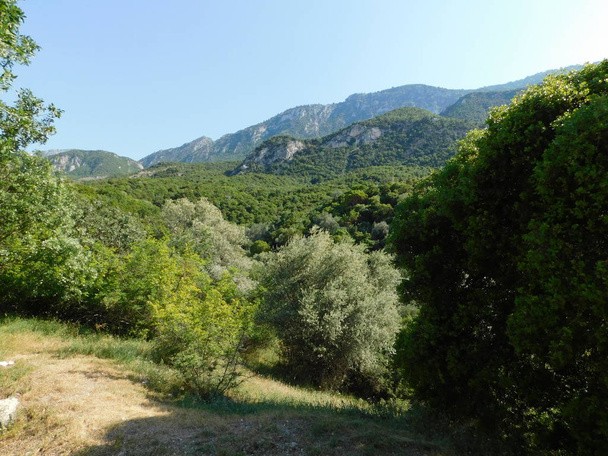
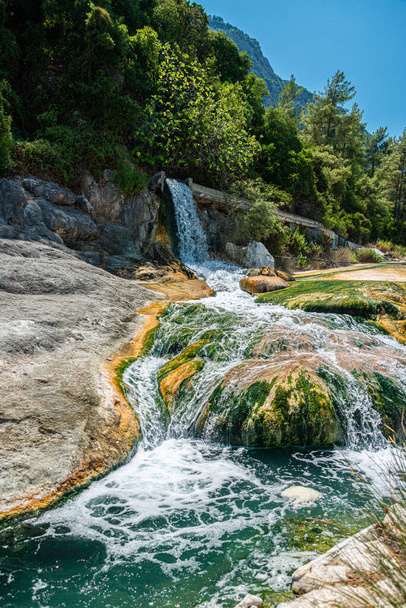
Located about 15 kilometers from Lamia and near the Maliakos Gulf, in ancient times, there was a 9-kilometer passage between the coast of the Gulf and Mount Callidromon. Within this passage, there were three narrow points where only one chariot could pass at a time. These were the famous Thermopylae Passes. The word "Thermo" comes from the hot springs in the area, and "Pylae" refers to the passage, which was the only route between Northern and Southern Greece. Additionally, the nearby hot springs created marshes, making the pass especially difficult to cross.
Hephaestus "Creates" the Hot Springs
According to myth, the springs were created by Hephaestus at the request of Athena, so that Hercules could bathe and regain his strength after each of his labors. For this reason, the springs were dedicated to him, who is connected to the area at various points in his earthly life.
Hercules Meets the Kerkopes
One of the lesser-known episodes of Hercules’ life took place in the Thermopylae area, where he met the Kerkopes – two mischievous brothers known for their trickery and deceit, who would rob and scam passing travelers. The term Kerkopes refers to a monkey with a short tail. When they were young, their mother warned them to watch out for someone who was "Melampygos," meaning someone with hairy buttocks.
At some point, they encountered Hercules while he was sleeping in Thermopylae and decided to steal his weapons. However, Hercules woke up immediately, caught them, and hung them upside down from a tree trunk, lifting it on his shoulders. The Kerkopes, however, started laughing. When Hercules asked why they were laughing, they replied that his hairy buttocks looked funny. Without missing a beat, Hercules laughed along with them and let them go free.
The Pyre of Hercules
Although Hercules successfully completed the Twelve Labors, his suffering did not end there. In fact, many more challenges awaited him. Many years after killing his wife Megara and their children, Hercules married Deianeira. One day, the Centaur Nessus tried to abduct her. Hercules shot him with an arrow that he had dipped in the Hydra's poison. As Nessus lay on the ground, realizing that his blood was also now poisoned, he gave Deianeira his bloodstained tunic, assuring her that with it, Hercules would remain faithful to her forever.
Years later, when Deianeira heard that Hercules was having an affair, she gave him Nessus' tunic, hoping it would bring him back to her. However, when Hercules put on the poisoned tunic, it began to tear into his flesh, burning his skin. Unable to bear the excruciating pain any longer, Hercules gathered wood and asked his beloved friend Philoctetes to light the fire. Before he died, Hercules gave Philoctetes his weapons, including the bow and poisoned arrows, and entrusted his body to the flames.
According to the myth, Zeus could not stand to see his son suffer. He enveloped him in clouds and brought him to Mount Olympus, where Hercules married Hebe, the goddess of youth, and spent the rest of his life with the gods.
In another version of the myth, Zeus, in an effort to cool his burning son, struck him with a thunderbolt, causing the Gorgopotamos River to spring forth.
The place where Hercules surrendered to the pyre is located at a site called Marmara, a small hill with views of Parnassus, Giona, and Vardousia. Today, there is a small mountain village with a few inhabitants, called Pyre of Hercules or simply Pyra. It is located in the Phocis region, at an altitude of 1,160 meters on the southern slopes of Mount Oeta, 58 kilometers from Lamia.